Credit risk: definition + management
April 25, 2024

Credit risk is the level of risk lenders take on when providing you with credit or a loan. They use credit risk management techniques to decide your approval based on how likely you are to repay them.
The information provided on this website does not, and is not intended to, act as legal, financial or credit advice. See Lexington Law’s editorial disclosure for more information.
Based on recent credit score statistics, most Americans have credit scores over 700. Unfortunately, millions of Americans have scores far below the national average. A good credit score offers various benefits, from lower interest rates to more options when renting a home.
One of the best ways to improve your credit is by getting new lines of credit, but high credit risk may make this difficult.
Banks and other financial institutions are happy to lend you money, but they want to be certain that you can and will pay them back. To do this, they use credit risk management, and that’s what you’ll learn more about here.
Our guide explains how credit risk is determined and what you can do to improve your overall credit health.
What is credit risk?
The definition of credit risk is the risk a lender takes when lending out money. This may come in the form of loans or lines of credit. Basically, credit risk in banks means they believe they may not receive repayment. To mitigate the risk, financial institutions look at different factors:
- Current amount of debt
- Income
- Credit score
- Credit history
There’s no surefire way to know whether or not a person will make their payments on time. Similar to the way insurance companies set their pricing, financial institutions use the information available to assess the likelihood of repayment.
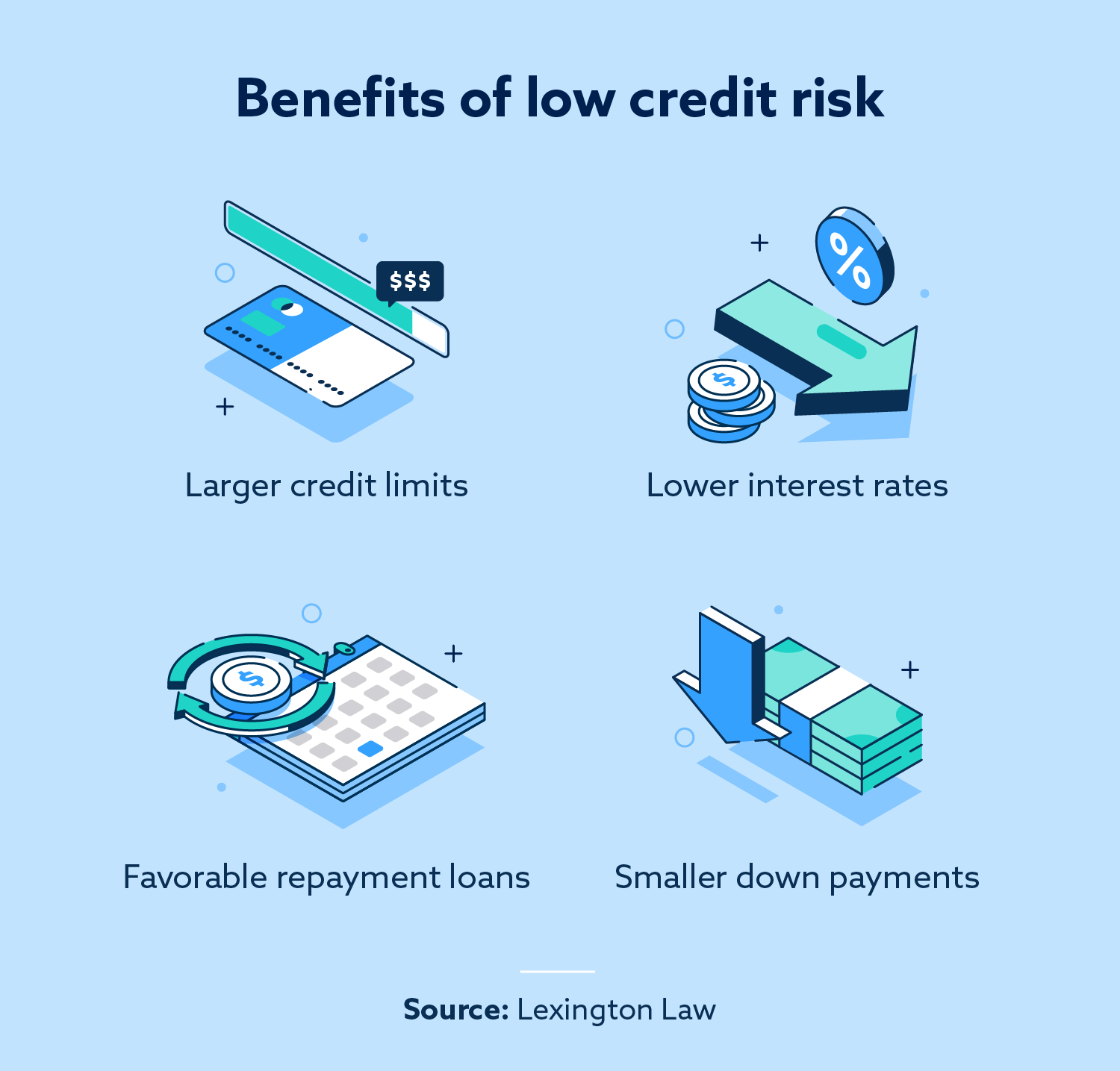
You want to lower your credit risk as much as possible because it can affect interest rates and your eligibility for certain types of loans and credit cards. If lenders view you as a low credit risk, you’re more likely to receive larger loans, lower interest rates and more favorable repayment terms.
Understanding credit risk
Each time a lender offers a mortgage loan, auto loan, credit card or any other type of loan, there’s a chance the person won’t pay them back. To manage credit risk, banks calculate the risk similar to how a credit score is calculated.
The ways a lender calculates credit risk can vary depending on the financial institution. As technology advances, many lenders have automated programs in place that can quickly analyze data and create a risk profile for a person. Some financial institutions also have departments dedicated to credit and risk management.
Credit risk vs. interest rates
Credit risk is one of the primary factors that affect your interest rates when you take out a loan or get a credit card. Although there are ways to get a loan with bad credit, it often comes with much higher interest rates. Having a bad credit score can actually cost you more money.
Many financial institutions will deny a loan if the credit risk is too high. The lenders and creditors who provide high-risk loans mitigate the risk by charging much higher interest rates. It’s a sort of fee for the risk they’re taking.
You can look at the average car loan interest rates for an idea of how much more a car will cost if the lender sees you as a high credit risk. For example, with a credit score of less than 579, a $10,000 used car will cost $16,340.21 with a five-year loan due to an average 21.32 percent interest rate. By improving your credit score to 660, you could save almost $4,000.
Credit risk types
Many financial interactions can be seen as risks for lenders. Failure to make a payment on a mortgage loan, car loan or credit card may paint a borrower as a credit risk and potentially affect their credit.
Here are a few other types of credit risk:
- Default risk: Inability to repay the amount borrowed in full or the amount is more than 90 days past the due date
- Institutional risk: Failure on the borrower’s part to comply with regulations
The 5 C’s of credit risk
Your credit history is the ultimate predictor of your credit risk. Lenders review your past financial actions in order to determine how likely you are to pay off your debt.
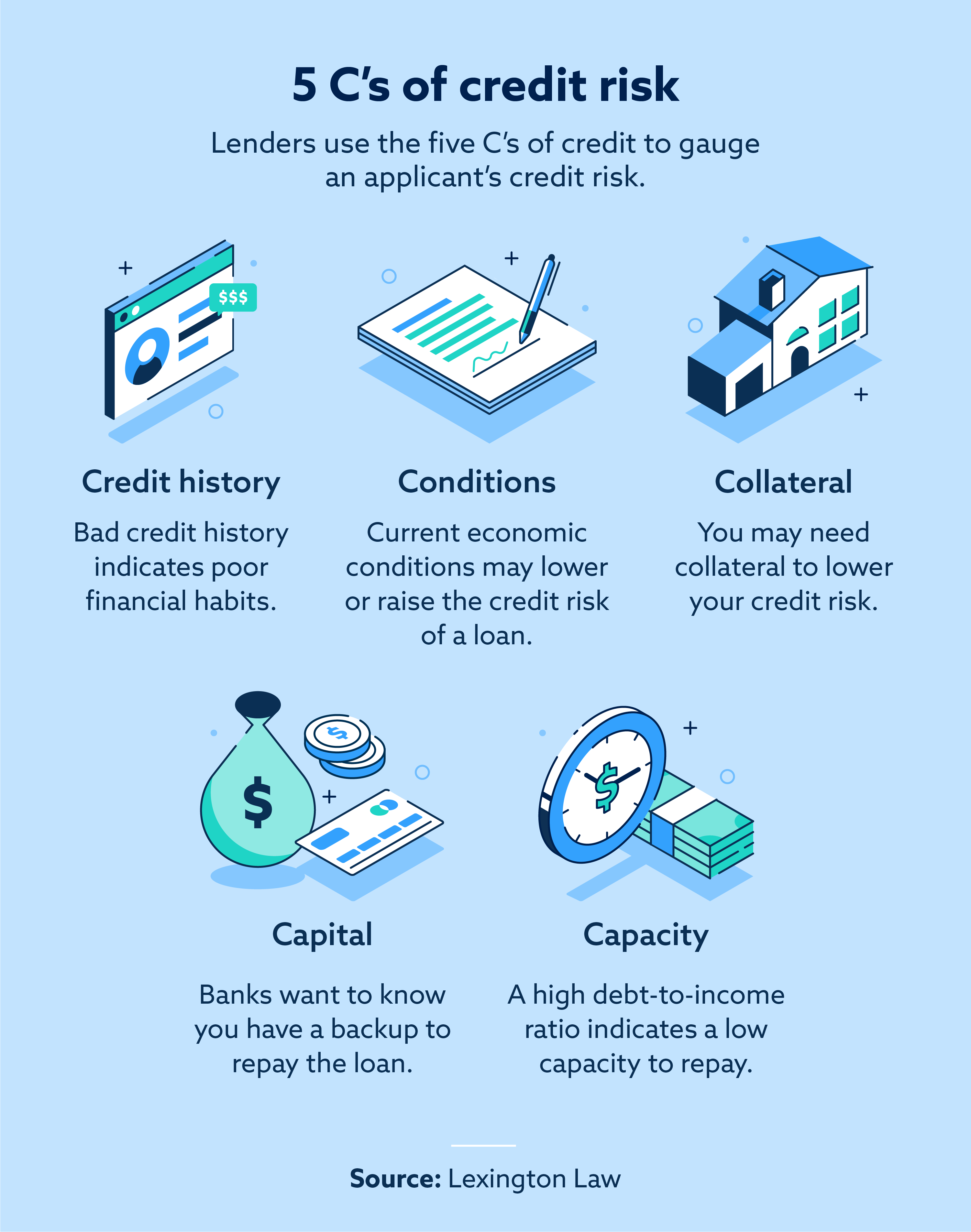
To gauge an applicant’s creditworthiness and financial risk, lenders use the five C’s of credit risk:
- Credit history: This is the primary C of the five C’s. If you have a good credit history, your credit score and credit report will reflect it. Alternatively, a bad credit history indicates a high credit risk.
- Capital: Capital is the total amount of assets you have, including savings, investments and other assets. Should something happen, you could sell these assets to repay the loan.
- Collateral: Secured loans like home or auto loans may require collateral like a down payment, reducing the overall loan amount. Some collateral may be at risk of repossession should you not repay the loan.
- Capacity: Your debt-to-income ratio (DTI) typically determines your capacity.
- Conditions: Some lenders may want to know what you’ll use the loan for. Conditions may also mean the current state of the economy and environment.
How do banks manage credit risk?
Different banks and financial institutions will use different strategies for credit risk management. For example, a bank may have a minimum credit score for lending. Other banks may have a credit risk monitor, which regularly reassesses the risk of potential borrowers based on creditworthiness and other factors.
Are you a credit risk?
With all this in mind, you may be wondering if you are a credit risk. While each lender has its own methods for determining credit risk, almost all use credit scores as a factor. As a general guide, any borrower with a credit score of less than 600 will be considered a higher credit risk.
In addition, if you have a history of missing or late payments, a low income or any other financial trouble that would fall under the five C’s, then you may be identified as a credit risk.
Unfortunately, many people are falsely identified as high credit risks because of inaccurate, unfair or unsubstantiated negative items on their credit reports. If you feel your FICO® score is impacted by inaccurate items, consider challenging the questionable negative items.
Here at Lexington Law Firm, we challenge credit inaccuracies on your behalf as a part of our credit service. To get started, sign up today.

Vince has considerable expertise in the field of bankruptcy law. He has represented clients in more than 3,000 bankruptcy matters under chapters 7, 11, 12, and 13 of the U.S. Bankruptcy Code. Vince earned his Bachelor of Science Degree in Government from the University of Maryland. His Masters of Public Administration degree was earned from Golden Gate University School of Public Administration. His Juris Doctor was earned at Golden Gate University School of Law, San Francisco, California. Vince is licensed to practice law in Arizona, Nevada, and Colorado. He is located in the Phoenix office.
Note: Articles have only been reviewed by the indicated attorney, not written by them. The information provided on this website does not, and is not intended to, act as legal, financial or credit advice; instead, it is for general informational purposes only. Use of, and access to, this website or any of the links or resources contained within the site do not create an attorney-client or fiduciary relationship between the reader, user, or browser and website owner, authors, reviewers, contributors, contributing firms, or their respective agents or employers.