Debt settlement: what to know and how it works
March 21, 2024

Debt settlement is the process of negotiating with your creditors to pay less than the full amount you owe.
The information provided on this website does not, and is not intended to, act as legal, financial or credit advice. See Lexington Law’s editorial disclosure for more information.
Debt can sometimes feel like a huge obstacle between you and your financial goals. But there are actions you can take that could help you make your debt more manageable.
One option is debt settlement, which can be an effective way for some people to reduce their debt. If you’re starting to feel like there is no way to pay back the full amount you owe on an account, debt settlement, instead of bankruptcy, could help.
Debt settlement may provide some relief, but be aware that it will likely have a negative impact on your credit report and score, so be sure to understand how it works and the pros and cons before proceeding.
Key takeaways:
- Debt settlement is a tactic for negotiating down debt with creditors.
- While it’s not for everyone, it can shorten the road to rebuilding your credit.
- The debt settlement process will have an initial negative impact on your credit.
What is debt settlement?
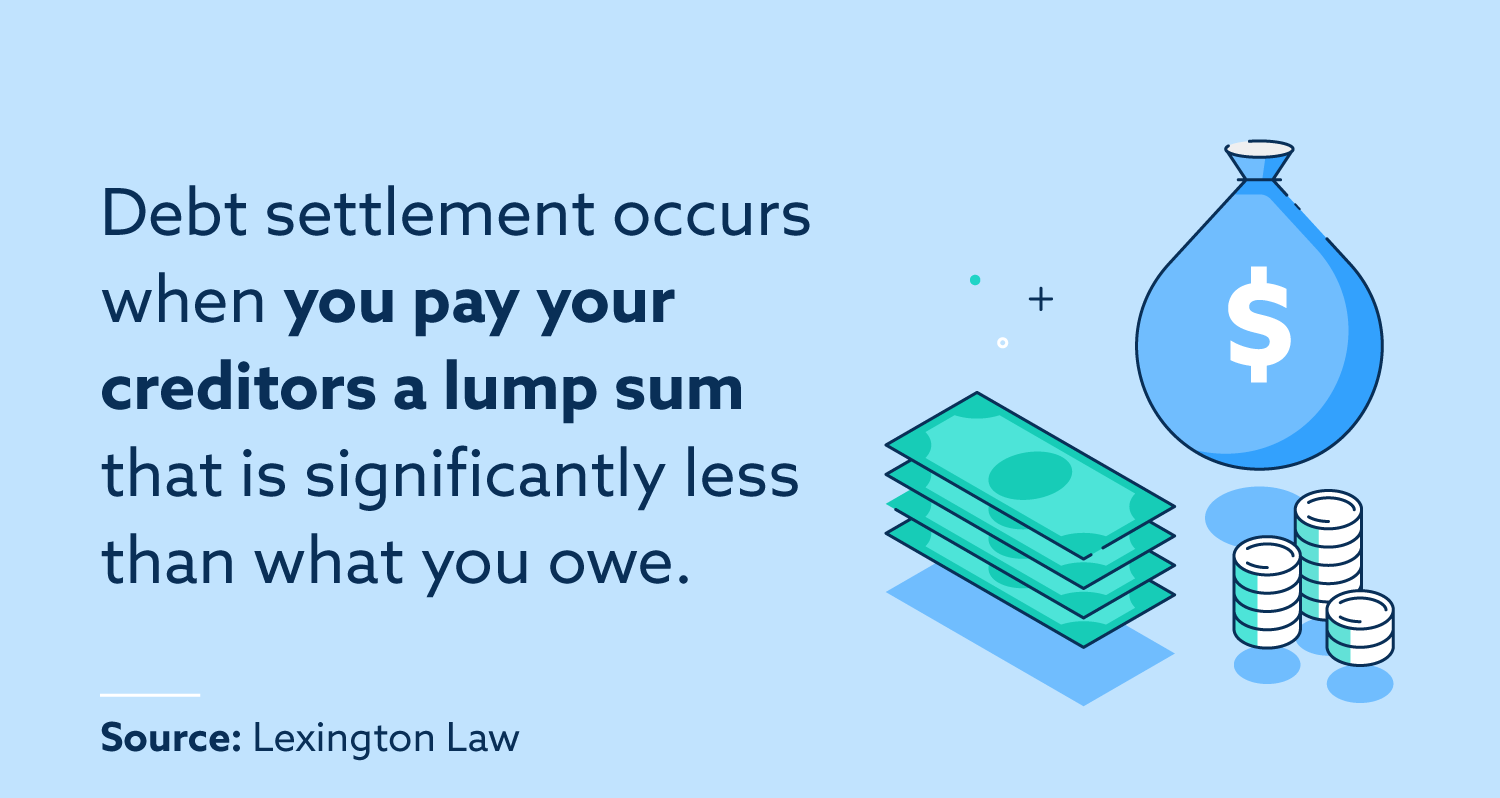
Debt settlement is a way to reduce the total amount of debt you owe a creditor by agreeing on and then paying off a single, significantly lower amount at once.
By hiring a debt settlement or debt relief company or by communicating directly with a creditor, people who are financially incapable of repaying a loan may be able to have a debt written off in exchange for this payment.
How does debt settlement work?
Debt settlement works by you negotiating with a creditor directly or through a professional debt relief service. Since most lenders would rather receive a partial payment than no payment, it could be in each party’s best interest to settle that debt. This allows the borrower to clear the debt for less than you owe while still satisfying the lender.
If you hire a debt settlement company, they will likely instruct you to cease payments to the relevant creditor. In around 90 to 180 days without payment, the amount you owe will be considered bad debt, and the company will use this as proof that you can’t repay the full debt as they start negotiating with the creditor. Since you’ll be paying back some portion of the debt if negotiations are successful, consider saving toward the goal amount while this is happening.
Benefits and risks of debt settlement
There are benefits and risks to pursuing debt or loan settlement—be sure to weigh the pros and cons carefully before proceeding.
Benefits
Here are some advantages to debt settlement:
- Debts are reduced, meaning you pay less money overall to the lender.
- Debt settlement can provide emotional relief if you’ve been experiencing stress about paying off your debt.
- Creditors you’ve settled with will stop contacting you.
- Your creditor will no longer be able to sue you over your settled debt.
- Debt settlement may allow you to pay off your debt faster.
- Debt settlement can prevent your account from going to collections or getting charged off.
- Debt settlement can have a positive long-term impact on your credit.
Risks
Here are some potential risks and disadvantages associated with debt settlement:
- A debt settlement will stay on your credit report for at least seven years.
- Debt settlement will add a negative mark to your credit report, which will likely lower your credit score.
- Some debt settlement companies generally do not have good reputations , and scams are a possibility. These companies are likely to ask that you stop making payments as they pursue negotiations and can leave you in a worst financial situation.
- Debt settlement can be a difficult and expensive process without help from a credit counselor.
- Not all creditors accept debt settlements. Attempting to pursue a debt settlement with a creditor that doesn’t accept your offer could lead to a debt collection lawsuit.
- In most cases, canceled debt is categorized as taxable income.
Which types of debts are eligible for debt settlement?
The most common types of debts eligible for debt settlement fall under the category of unsecured debts. Unsecured debts have no collateral that the lender can take away or leverage for repayment. Still, some types of unsecured debt—such as student loans—are rarely settled by debt settlement companies. Typical unsecured debts include:
- Credit card debt
- Unpaid medical bills
- Registration or membership dues
- Credit lines or cards for specific stores
- Signature loans
Secured debt is rarely eligible for settlement, but it’s possible if the creditor has already retaken the property in question and there is still an outstanding balance you can’t repay. Here are some examples of secured debt:
- Loans for specific property, like mortgage or auto loans
- Secured loans
- Government loans
- Unpaid taxes or IRS fees
How to settle a debt yourself
To initiate debt settlement on your behalf, you’ll need to reach out to the creditor directly. Here’s how.
- Step 1: Find the contact information for the lender you want to settle with.
- Step 2: Calculate the amount of debt you can realistically afford.
- Step 3: Decide how soon you will be able to pay this amount.
- Step 4: Write a debt settlement letter that clearly states what you can realistically afford to pay back so you can settle your debt.
- Step 5: Remember to request a response by a specific date to keep the process moving.
Though some people can pursue debt settlement on their own, there’s no guarantee that it will work. For those without the time or resources to take this process on by themselves or who want to have the best chance at success, working with a professional debt settlement company is also an option.
How to settle a debt by hiring a debt settlement company
A debt settlement or debt relief company can be an appealing option for those who feel more comfortable allowing a professional to handle the process. Here’s how to go about hiring one.
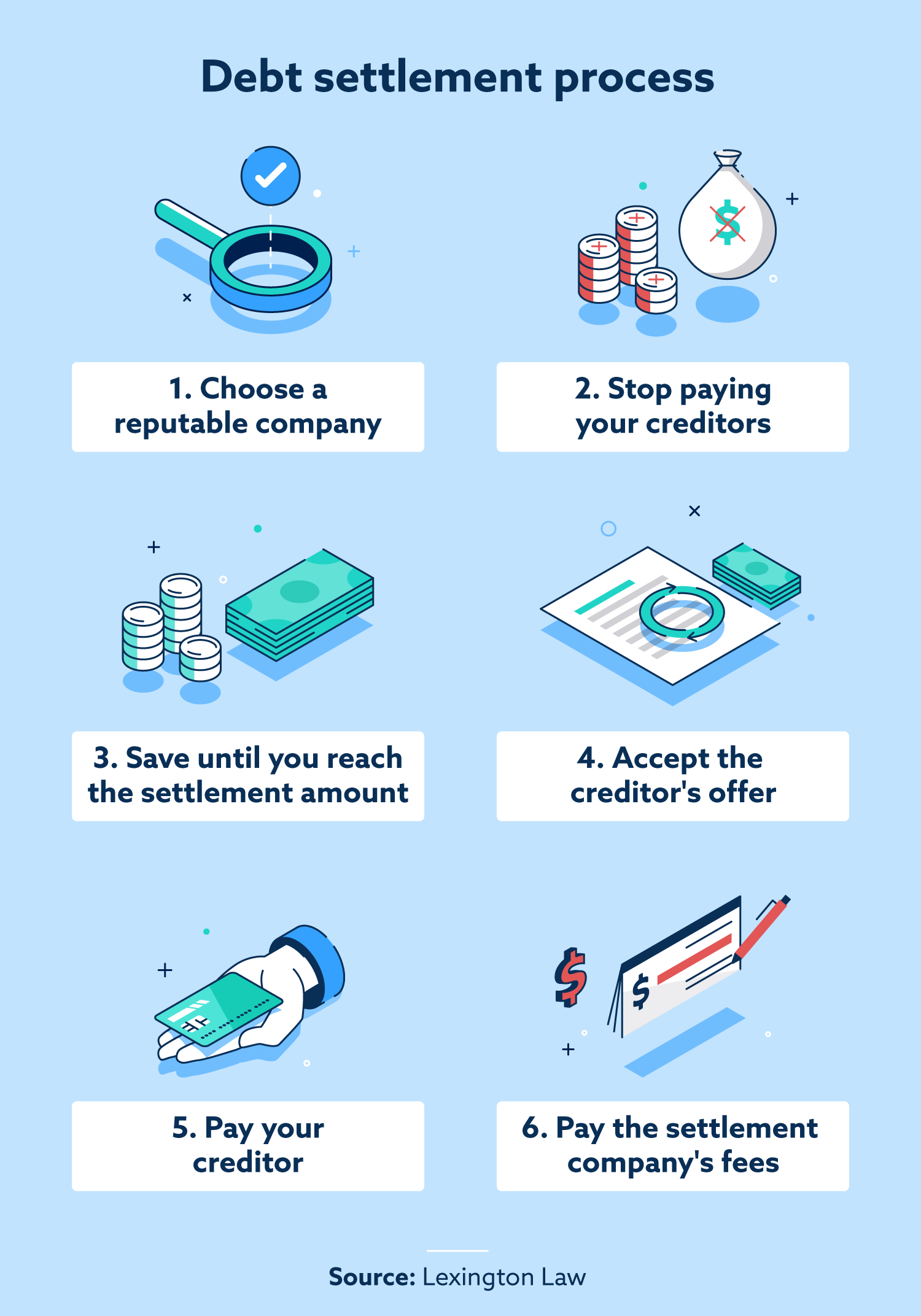
- Step 1: Choose a reputable company by reading reviews and scheduling consultations with multiple providers. Consider vetting your choices first by consulting your state’s consumer protection agency or the federal consumer protection bureau to see if they’ve had official complaints filed against them.
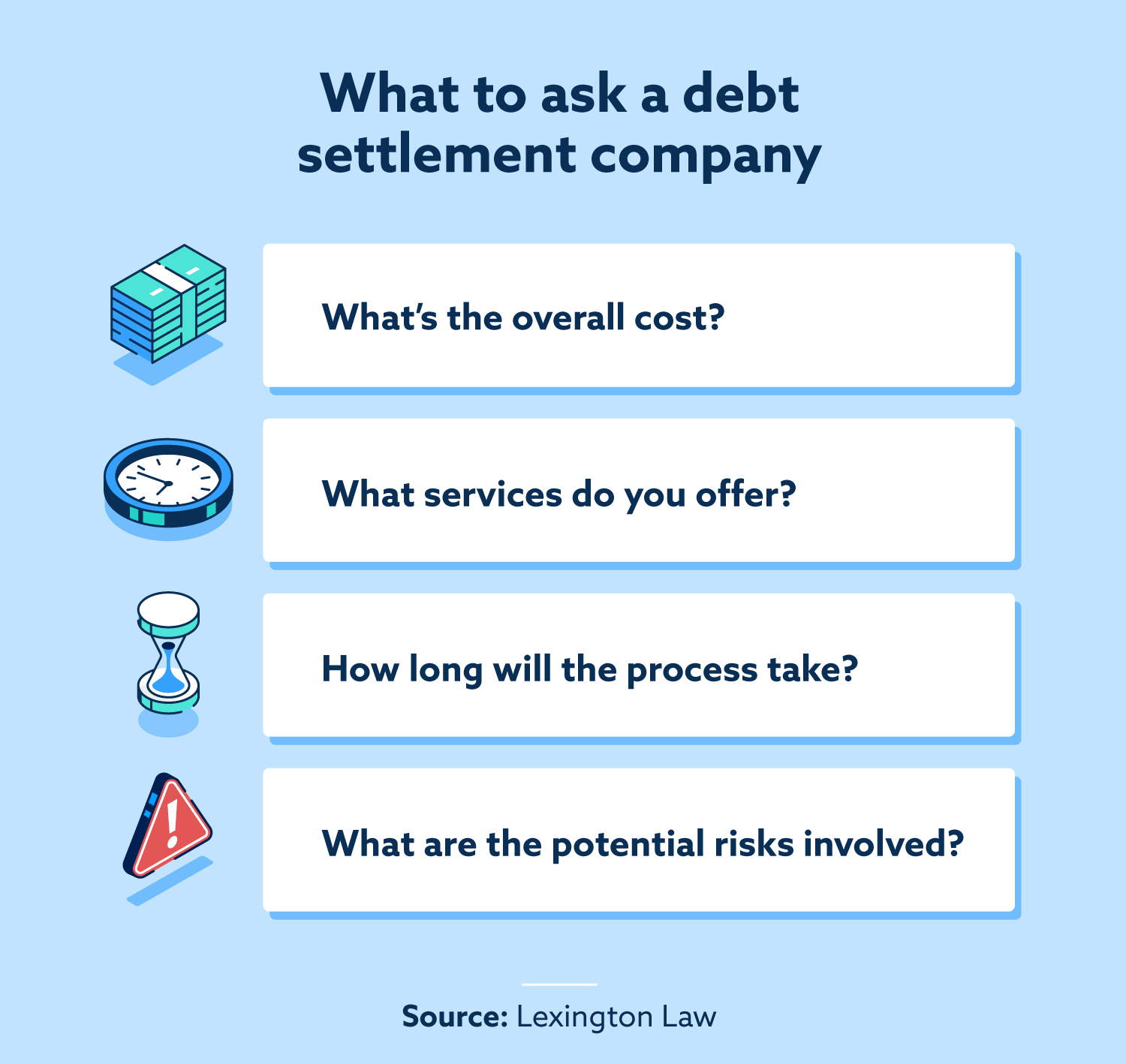
- Step 2: Stop paying your creditors once you hire your company. They will likely advise you to do this and should be clear about how much settling will cost. A reputable company will also be up front about the timeline and risks involved. If the company isn’t transparent with this information and the process, they could be trying to scam you.
- Step 3: Save until you reach the settlement amount. Counselors may direct you to deposit money regularly into a separate account to help you reach this goal.
- Step 4: Accept the creditor’s offer once they’ve finished determining that you can’t repay the full debt.
- Step 5: Pay your creditor the agreed amount in full.
- Step 6: Pay the settlement company’s service fees. This will likely be in the range of 15 – 25 percent of the settlement amount. This fee to pay the settlement company is separate from the amount owed on the debt itself.
Debt settlement is a risky business. Your credit card issuer could simply refuse to accept that you can’t pay your debt. Some lenders won’t deal with debt settlement companies at all. Or, you may get an offer that is more than you can afford.
Debt settlement tax implications
Debt collectors that accept a debt settlement reducing what you owe by $600 or more are legally required to file a 1099-C form with the IRS and notify you of the form submission. For example, if you settle an $8,000 debt for $4,000, the IRS will view the $4,000 difference as taxable income.
Likewise, you must report that portion of forgiven debt as income on your tax return. After you settle your debt, make sure to keep an eye out for a 1099-C form from your debt collector and to include the amount in your tax return.
In some cases, you may qualify for an exclusion that reduces the amount you owe on a debt settlement. If you qualify for an exclusion, you have to report the amount and the reason that you qualify to the IRS by filing a 982 form.
Alternatives to debt settlement
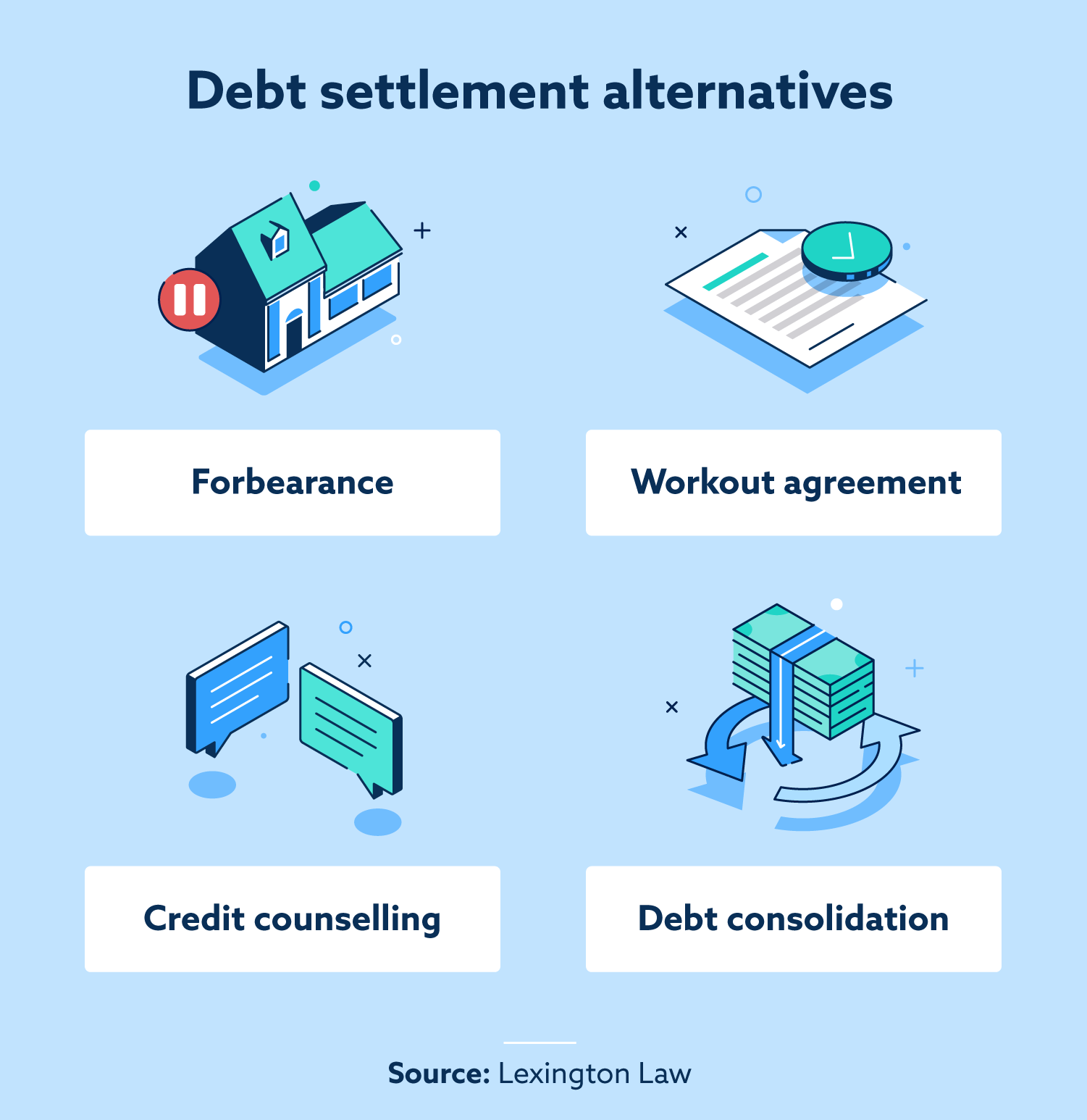
If you can’t keep up with payments and feel overwhelmed by your debt, there are other options besides debt settlement. Depending on your financial situation, one of these options could be more beneficial and present less risk.
- Forbearance: Your credit card company temporarily reduces your interest or monthly payment or waives your late fees to give you some “breathing space.” Forbearance works well if you’re confident you can return to regular repayments after a few months.
- Workout agreement: This is an arrangement with your credit card company to reduce interest rates and waive late fees. A workout agreement is a good option if you can still make monthly payments but find that fees and interest are increasing your debt.
- Credit counseling: Many nonprofit and government agencies provide free or inexpensive credit counseling services that can help you lower interest rates or get fee waivers. This can be a good option for those who just need a little relief or could benefit from more general debt management advice.
- Debt consolidation: Combine debt from several credit cards into one debt consolidation loan with a fixed rate and a single monthly payment. Debt consolidation works well for those not too deep in debt, allowing them to continue making payments with lower interest rates.
Frequently asked questions about debt settlement
If you’re still curious about how debt settlement works, here are answers to a few common questions.
How much can debt settlement affect your credit score?
Debt settlement severely impacts your credit score and should be considered a last resort. A settled account remains on your credit file for up to seven years and could hurt your score significantly.
In addition, once you contact your creditors to negotiate your debt, they’ll likely close your account(s). This may temporarily reduce your credit score as your credit utilization rate increases.
How long does debt settlement stay on your credit report?
A settled account can stay on your report for up to seven years. Each time a bank or potential lender pulls your credit report, they can see the settled debt.
Having this mark on your report lowers your creditworthiness and the likelihood of you being approved for another credit card or loan. After the debt settlement is removed from your report, you can work to rebuild your credit.
Who qualifies for debt settlement?
Debt settlement may be an option for those who have a demonstrated inability to repay unsecured debts like credit card bills, medical bills and signature loans. Keep in mind that not all unsecured debt is eligible for debt settlement, and some secured debt may be eligible in some cases. Ultimately, the decision lies with the lender.
Is it a good idea to settle debt?
Anyone considering debt settlement should remember that it might not work out, and a successful settlement can negatively impact their credit. Anyone seeking professional debt settlement help should also be cautious about working with debt relief companies and vet them thoroughly to ensure they are reputable.
Debt settlement and credit repair
Whichever method for debt settlement you choose, the process might show you some unexpected negative items on your credit report. If this happens, the good news is that you’re legally entitled to dispute those items if you can prove that they’re inaccurate or erroneous.
You can consult a credit repair firm like Lexington Law Firm to get help challenging, disputing and working with the credit bureaus to address any inaccurate and unsubstantiated negative items on your report. Reach out to us to learn more about our credit repair services.

Candace Begody was an Associate Attorney at Lexington Law. Ms. Begody was born and raised in Arizona. She earned her juris doctor from Arizona State University's Sandra Day O'Connor College of Law and her master's in business from the W.P. Carey School of Business, also at ASU. Ms. Begody joined Lexington Law in 2022. Prior to that, she worked in transactional and business law in the Phoenix area. Ms. Begody is licensed to practice law in Arizona and was located in the Phoenix office.
Note: Articles have only been reviewed by the indicated attorney, not written by them. The information provided on this website does not, and is not intended to, act as legal, financial or credit advice; instead, it is for general informational purposes only. Use of, and access to, this website or any of the links or resources contained within the site do not create an attorney-client or fiduciary relationship between the reader, user, or browser and website owner, authors, reviewers, contributors, contributing firms, or their respective agents or employers.