


A credit report is split into five sections: personal information, public records, credit inquiries, account information, and consumer statements. Reviewing all three of your reports (Experian, Equifax, and TransUnion) at least once a year is the best way to catch errors, fraud, or outdated items before they cost you a loan or apartment.
Table of contents
How to Read a Credit Report and What to Look For
A credit report breaks your credit history into five sections: personal information, public records, credit inquiries, account information, and consumer statements. Each consumer has three reports, one each from Experian, Equifax, and TransUnion, and it’s worth reading through all three at least once a year. That’s where inaccurate, outdated, or fraudulent information tends to surface first.
Below, we walk through each section, the red flags to check for, and what the status on an account actually means.

Why credit reports matter
A credit score gives you a single number; a credit report shows the underlying history that produced it. Lenders, landlords, insurers, and sometimes employers pull this report to judge how reliably you manage money. Learning to read it well means you catch problems, like errors, fraud, or outdated negative items, before they cost you a loan, an apartment, or a job.
The five sections of a credit report
1. Personal information
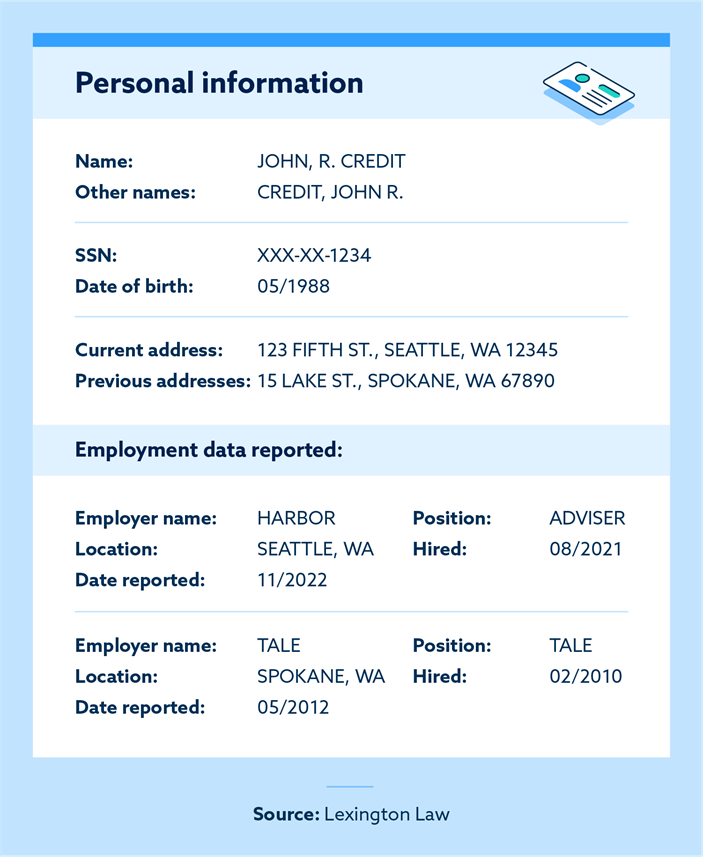
Your name, current and previous addresses, date of birth, Social Security number, phone number, and employment history. This section is populated by data you and your creditors provide.
Watch for: names you don’t recognize, addresses you never lived at, unfamiliar phone numbers, or an incorrect Social Security number. All of these can indicate accounts opened fraudulently in your name.
2. Public records
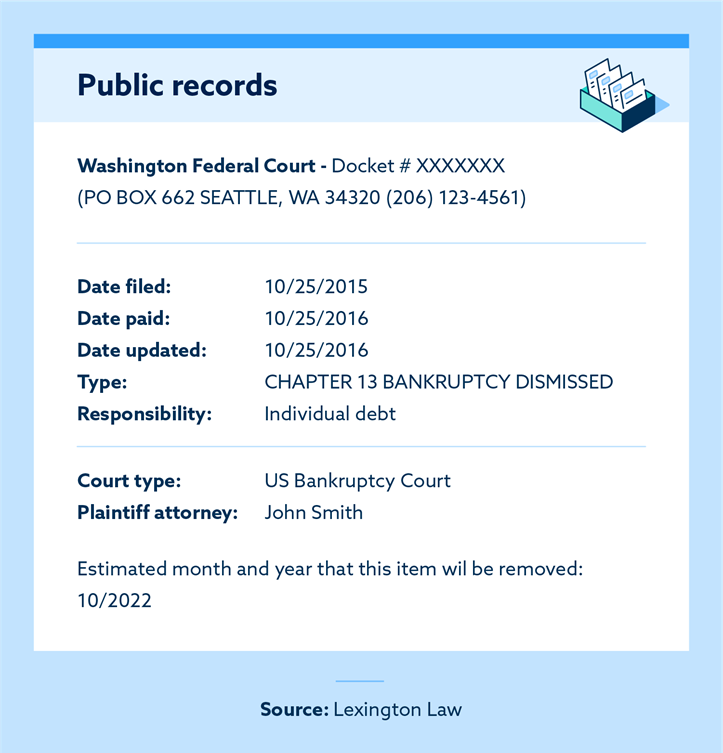
Bankruptcies are now the only public record type that appears on a credit report. Civil judgments and tax liens have been excluded since the credit bureaus’ 2017-2018 National Consumer Assistance Plan. Bankruptcies stay on your report for seven to ten years depending on the chapter filed.
Watch for: a bankruptcy or foreclosure entry still showing after the seven-to-ten-year mark. If you find one, that’s worth raising directly with the credit bureau.
3. Credit inquiries
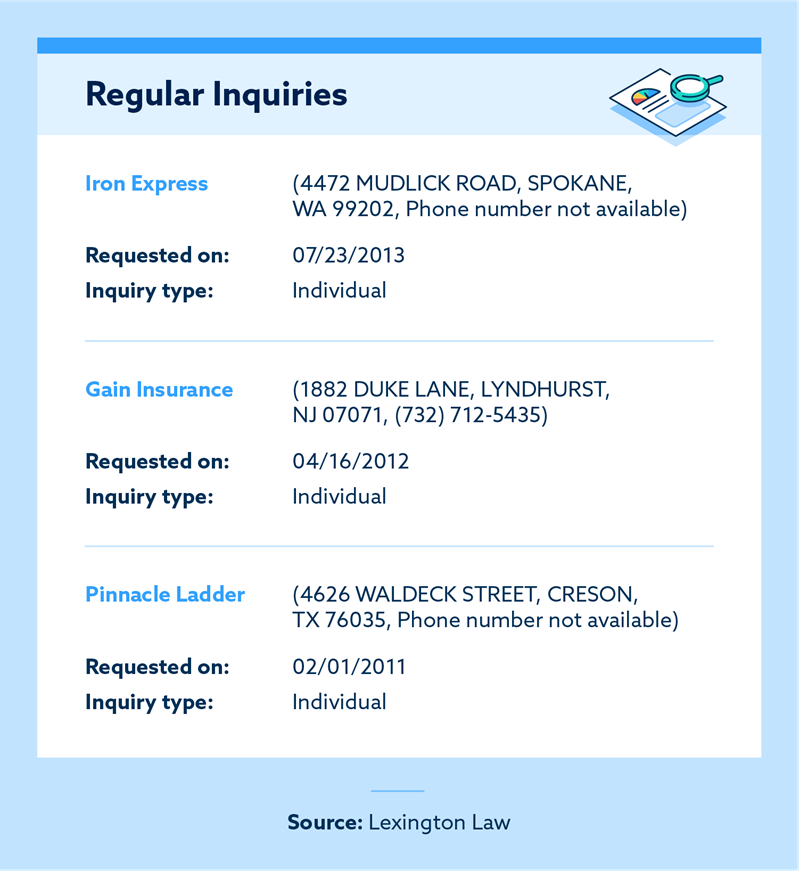
- Soft inquiries happen when you check your own report or a creditor pre-qualifies you. These never affect your score.
- Hard inquiries happen when you formally apply for credit. They can affect your score for up to two years.
Watch for: inquiries from creditors you don’t recognize, or the same creditor pulling your credit multiple times without telling you.
4. Account information
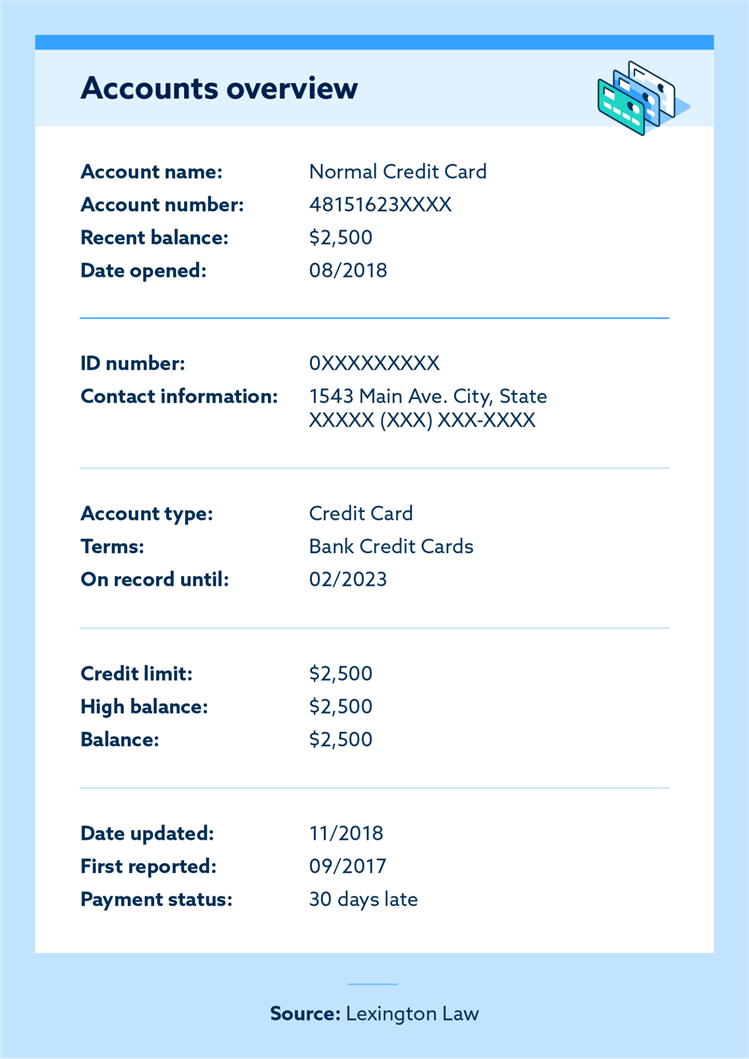
Every open and closed line of credit reporting to that bureau, including account type, open and close dates, payment history, credit utilization, current balance, loan status, and whether you’re an individual owner, joint owner, or authorized user.
What an account line item actually looks like: most free consumer reports list each account as a row with the creditor’s name, an account type, an open date, a plain-English status, and a balance, something like “CAPITAL ONE, Revolving, Opened 03/2019, Status: Paid as agreed, Balance: $412.” The status is the part most people skip past, and it’s worth checking closely.
What the status actually means:
- Paid as agreed, Current, or OK: no issues.
- 30, 60, 90, or 120 days late: the account missed a payment by that many days.
- Charge-off: the creditor recorded the debt as a loss, though you may still owe it.
- Collection: the debt was sent to or sold to a collections agency.
A note on codes: lenders and creditors sometimes see this same information as a shorthand code rather than plain English, for example “R1” for a revolving account paid as agreed, or “I3” for an installment account 60 days late. The free report you pull yourself typically shows the plain-English version instead, so don’t be alarmed if you don’t see codes like this on your own copy.
Watch for: accounts you don’t recall opening, charge amounts that don’t match your records, on-time payments marked late, or delinquencies you’ve already paid off.
5. Consumer statements
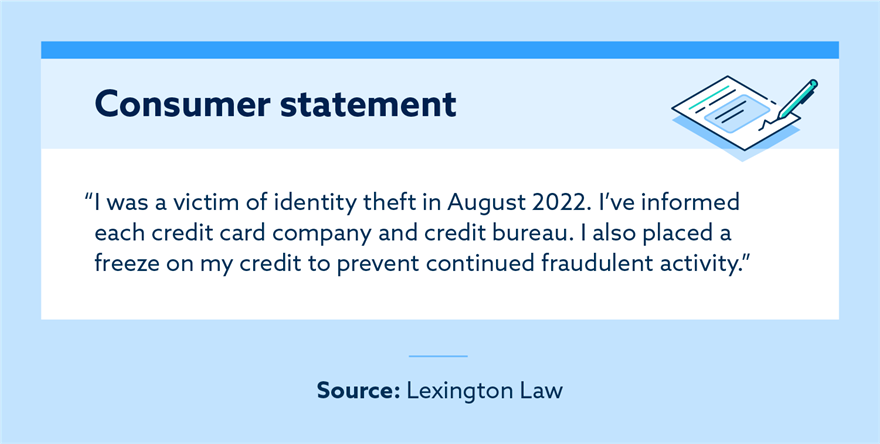
A note you’ve added to your file, usually explaining a dispute or a late payment. These can stay on your report for up to ten years.
Watch for: a statement that’s aged past the point where it’s still useful to keep.
How the codes differ across bureaus
The five sections above are consistent across Experian, Equifax, and TransUnion, but the specific codes or status labels each bureau uses aren’t identical. Each bureau publishes its own glossary for a deeper reference (Equifax, TransUnion, Experian).
How to get your free credit report
AnnualCreditReport.com is the official source for a free copy of each of your three reports once a year (your credit score isn’t included). You’re also entitled to a free report any time you’re denied credit or have adverse action taken against you.
How to dispute an error
- Gather documentation proving the error.
- Send it to the credit bureau that reported it, and get a tracking number.
- Wait for a response. Bureaus have 30 to 45 days once they receive your dispute.
If you’d rather not manage this process alone, we can help review your credit reports and identify inaccuracies, and challenge questionable negative items with the credit bureaus on your behalf.
Knowing how to read a credit report correctly will help you spot any signs of identity theft and erroneous or unsubstantiated negative items that don’t belong on your report. Lexington Law Firm can help you work to address inaccurate information and improve your credit through our credit repair process.
Frequently Asked Questions
Personal information, public records, credit inquiries, account information, and consumer statements.
At least once a year from each of the three bureaus, more often if you’re actively disputing an error or rebuilding credit.
No. Checking your own report is a soft inquiry and has no effect on your score.
A credit report is the detailed history; a credit score is a single number calculated from that history.
Usually not. Codes like R1 or I3 are typically shown to lenders and creditors, not on the plain-English version you pull for yourself at AnnualCreditReport.com.
Request it once a year from each bureau at AnnualCreditReport.com, or get a free copy any time you’re denied credit based on your report.
The information provided on this website does not, and is not intended to, act as legal, financial or credit advice. See Lexington Law’s editorial disclosure for more information.
Articles have only been reviewed by the indicated attorney, not written by them. The information provided on this website does not, and is not intended to, act as legal, financial or credit advice; instead, it is for general informational purposes only. Use of, and access to, this website or any of the links or resources contained within the site do not create an attorney-client or fiduciary relationship between the reader, user, or browser and website owner, authors, reviewers, contributors, contributing firms, or their respective agents or employers.