


Key takeaways
- The most direct way to build credit at 16 or 17 is for a parent to add the teen as an authorized user on a credit card account that has a long record of on-time payments and low utilization.
- Teens generally cannot open a credit card, secured card or credit builder loan in their own name until they turn 18, so parents play the central role before then.
- Some lenders allow a teen to borrow with a parent as cosigner, but the parent becomes legally responsible for the debt and both credit reports can be affected by late payments.
- Habits formed at 16 and 17 (saving, budgeting and understanding debit versus credit) prepare a teen to manage their own accounts responsibly at 18.
- The FTC recommends checking a child’s credit report around age 16 so there is time to address identity theft or errors before the teen applies for credit.
If you are researching how to build credit at 16 or 17 years of age, the short answer is that a parent’s help is required. Minors generally cannot open credit accounts on their own, so the most effective step is adding your teen as an authorized user on a well-managed credit card. Pairing that step with practical lessons in saving, budgeting and responsible card use gives your teen a credit history and the habits to protect it.
Starting early matters. According to Experian®, Gen Z carries the lowest average FICO® Score of any generation, at 678 in 2025. A teen who reaches 18 with a few years of positive history already on file may be in a stronger position than many peers when applying for a first card, apartment or auto loan.
Credit scores influence how much you pay for borrowing throughout adulthood. The average car loan interest rate is considerably higher for borrowers with lower scores, and similar gaps appear in mortgages and insurance pricing. The guide below explains what parents can do now, while your teen is 16 or 17, to set up a healthy credit journey.

How to add your teen as an authorized user to build credit under 18
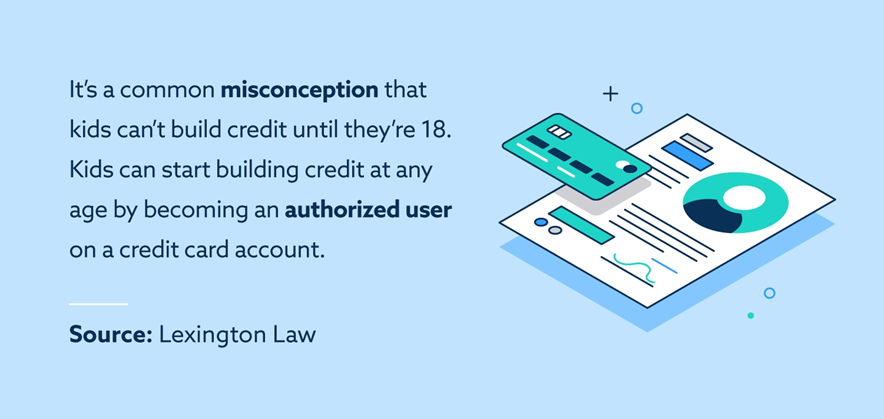
For parents learning how to build credit under 18, adding your teen as an authorized user is the one direct way to start a credit history before they turn 18. An authorized user is someone who can make purchases on another person’s credit card account but is not legally responsible for repaying the balance. When the card issuer reports the account to the credit bureaus, the account’s history can appear on the teen’s credit report as well.
This approach, sometimes called piggybacking, lets your teen benefit from your established record. On-time payments and low credit utilization (the share of your available credit you are using) strengthen your credit and can also benefit your teen’s.
Steps to add your teen as an authorized user
- Choose the right card. Pick an account with a long history, a perfect or near-perfect payment record and a balance well below the limit.
- Confirm the issuer’s policies. Ask whether the issuer reports authorized users to TransUnion®, Experian and Equifax® and whether it sets a minimum age for authorized users.
- Add your teen. Most issuers let you add an authorized user online or by phone with the teen’s name, date of birth and, in some cases, Social Security number.
- Decide on card access. You can give your teen a physical card with a low spending limit or keep the card yourself. The credit history can still be reported either way.
- Keep the account in good standing. Your payment behavior now shapes two credit reports, so continue paying on time and keeping balances low.
What to weigh before you add your teen
Authorized user status works in both directions. A missed payment or high balance on your account can hurt your teen’s credit just as positive activity can help it. If your own report has issues you want to review first, address them before linking your teen’s history to the account. Our research on parental support shows how much families’ financial decisions can shape the next generation’s footing.
How to teach your teenager the importance of credit
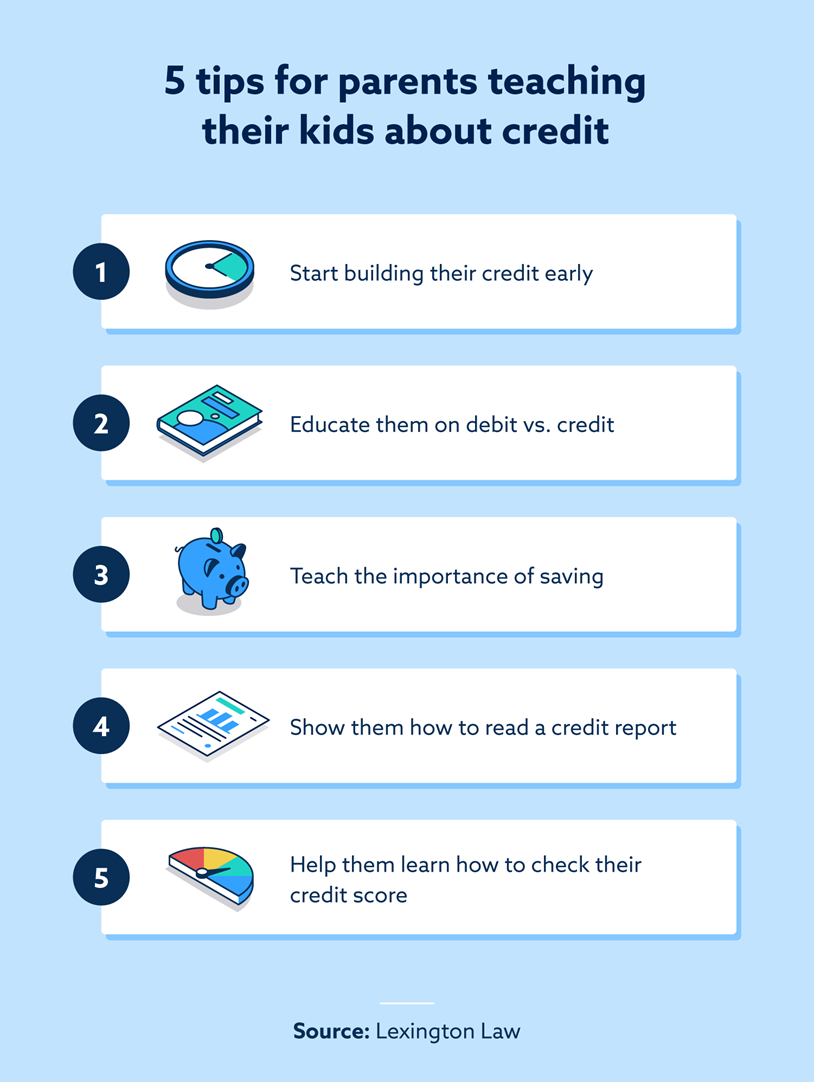
Learning how to build credit as a teenager is as much about habits as it is about accounts, and that is especially true if you are working out how to build credit at 17 with only a year before your teen can apply on their own. Saving, budgeting and understanding how debt works form the foundation your teen will rely on when they become eligible for their own accounts. At 18, when teens become eligible for their own credit card, options such as a secured credit card open up, and our guide to building credit at 18 covers those next steps. The lessons below help your teen arrive at that milestone prepared.
Teach the importance of saving
It is difficult to pay a credit card bill if the bank account is empty when the bill is due, which is why understanding the value of saving at 16 and 17 is so useful. Budgeting and saving money together can help your teen develop positive habits for managing their finances.
If your teen earns money from a part-time job or chores, consider ways to reward saving. One approach is to mimic a 401(k) employer match. For example, you might match 50 percent of what they save, up to 5 percent of their monthly earnings. Show them on paper how much additional money they earn simply by setting some aside.
Cosign on a personal loan
Some banks and credit unions allow a teen to take out a small loan with a parent as cosigner, though many lenders require borrowers to be at least 18. Cosigning works much like authorized user status because your teen benefits from your established credit. The difference is that a cosigner is legally responsible for repaying the loan if the primary borrower does not.
A small personal loan with predictable monthly payments can help your teen build a record of installment payments, which adds to their credit mix. Before you cosign, confirm the lender reports the account in your teen’s name and that the payment fits comfortably within your teen’s budget.
Cosign on a car loan
Many teens look forward to getting a license and their first car, and that milestone can double as a credit-building opportunity. If a lender allows it, cosigning an auto loan lets your teen qualify based on your credit history. When your teen makes each payment on time, they build a track record that may help them finance their next vehicle without a cosigner.
Lender policies vary, and many auto lenders require the primary borrower to be 18. If your teen is not yet eligible, this may be a conversation to revisit around their 18th birthday. In the meantime, it is helpful to involve them in the budgeting process for insurance, fuel and maintenance.

Teach the difference between debit and credit and when to use them
Your teen will benefit from understanding when to use a debit card, when to use a credit card and when to draw on savings. A debit card spends money that is already in a checking account, while a credit card borrows money that must be repaid, often with interest.
Opening a checking or savings account for your teen is a practical way to build these habits. Many banks offer teen accounts with a parent as joint owner, which lets you monitor activity while your teen practices tracking balances and avoiding overdrafts. These teen spending habits carry directly into how they will manage credit later.
You can also teach borrowing when your teen asks to borrow money. Treat it like a real loan with a small interest charge, much like a credit card, and offer an interest-free period if they repay quickly. This mirrors the 0 percent promotional periods many cards offer.
Show them what affects credit reporting
As your teen learns how credit works, show them what does and does not appear on a credit report. Credit card and loan payments are typically reported to the credit bureaus, along with balances, credit limits and account age. Late payments of 30 days or more can be reported and may remain on a report for up to seven years.
Many everyday bills, such as rent, utilities and phone plans, are usually not reported unless a payment goes to collections. Some services report rent and utility payments as an additional way to build credit, which can be useful for your teen to know once they move out.
Teach your teen how to responsibly manage a credit card
Authorized user status is an effective teaching tool because your teen can watch credit management in real time. Walk through the monthly statement together and point out the due date, the minimum payment and the statement balance. Explain why paying the full balance on time each month avoids interest and protects both of your credit histories.
Use the same statement to explain utilization. Show your teen how their spending compares with the credit limit and why keeping balances low (many experts suggest under 30 percent of the limit) is generally better for credit scores. If they hold a card, set a spending cap and ask them to reimburse you for purchases from their own savings.
The importance of monitoring your teen’s credit
The FTC recommends checking your child’s credit report before they turn 18 because of credit card fraud and identity theft. Children’s Social Security numbers are attractive to identity thieves because the fraud can go unnoticed for years.
The FTC’s Consumer Sentinel Network Data Book 2024 recorded almost 450,000 reports of identity theft involving credit card fraud, which often means someone opened a credit card account using a stolen Social Security number. By monitoring your teen’s credit, you can be alerted to potential signs of child identity theft before it affects their first applications.
Learning how to build credit at 16 and 17 starts with making sure the foundation is accurate, and that applies to your report as well as your teen’s. If you plan to add your teen as an authorized user, reviewing your own credit first can help you spot entries that may be inaccurate. Our advocates can help you identify and challenge questionable items through our services, and you can start with a free credit assessment today.
Building credit at 16 and 17 FAQ
At what age can you start building credit?
There is no legal minimum age to start building credit, so a child can begin building a history whenever a parent adds them as an authorized user. Teens generally cannot open their own credit card until 18, and lenders set their own age requirements for loans.
Are there any downsides to adding my teen as an authorized user or cosigning on a loan with them?
Yes, adding a teen as an authorized user or cosigning a loan links your credit to theirs. If there are late payments or other negative marks on the shared account, both people’s credit can be affected. As a cosigner, you are also legally responsible for the debt if your teen does not pay.
How can I build my child’s credit?
You can build your child’s credit by adding them as an authorized user on your card and, where a lender allows it, cosigning a small loan with them. Teaching saving, budgeting and responsible card use alongside these steps helps them maintain good credit as an adult.
How do you check your child’s credit report?
You can check your child’s credit report for free through AnnualCreditReport.com or by contacting the three major credit bureaus, which have specific procedures for minors. The FTC suggests checking around age 16. Credit reports do not include a credit score, so you will need to look elsewhere for the score itself.
Can I add my child to my credit to build their credit?
Yes, you can add your child as an authorized user on your credit card account to help build their credit. This also gives you a natural opportunity to teach them how credit works at a young age.
How do I get a credit card for my teenager to build credit?
A teenager generally cannot get a credit card in their own name until 18, and before then a credit card for your teenager to build credit means adding them as an authorized user on your account. You can give them a card with a low spending limit or keep the card yourself while the history is reported.
At what age do you get a credit score?
You can get a credit score at any age once a credit account appears on your credit report, such as an authorized user account. FICO generally needs an account that has been open and reported for about six months, while some VantageScore® models can generate a score sooner.
Note: The information provided on this website does not, and is not intended to, act as legal, financial or credit advice. See Lexington Law’s editorial disclosure for more information.
Articles have only been reviewed by the indicated attorney, not written by them. The information provided on this website does not, and is not intended to, act as legal, financial or credit advice; instead, it is for general informational purposes only. Use of, and access to, this website or any of the links or resources contained within the site do not create an attorney-client or fiduciary relationship between the reader, user, or browser and website owner, authors, reviewers, contributors, contributing firms, or their respective agents or employers.