


Key takeaways
- Learning how to build credit without a credit card is possible because payment history, debt levels and account age can all be established through loans, authorized user accounts and alternative data.
- Becoming an authorized user on a trusted person’s card can add that account’s history to your credit report without a credit check.
- Credit builder loans typically range from $300 to $1,000 with terms of six to 24 months, and on-time payments are reported to the credit bureaus.
- A cosigner can help you qualify for an installment loan if low or no credit makes approval difficult on your own.
- Rent, utility and phone payments generally appear on your credit report only when you enroll in a reporting or alternative credit data program.
Can you build credit without a credit card? Yes. Learning how to build credit without a credit card comes down to creating a record of on-time payments and responsible borrowing through other types of accounts. Authorized user status, credit builder loans, cosigned installment loans and rent or utility reporting can all add positive information to your credit report, and none of them requires you to carry a card of your own.
Newer scoring models make that consistency even more valuable. VantageScore® 4.0 uses trended credit data, which looks at how your balances and payments change over time rather than at a single snapshot. Steady, long-term behavior is what these models reward, and that behavior is available to anyone willing to manage a few accounts carefully.
Most of the time, your credit score is calculated based on five factors:
- Payment history: Your record of on-time, late or missed payments
- Credit utilization: The share of your available revolving credit that you are using
- Length of credit history: How long your accounts have been open
- New credit: How many accounts you have opened and how many hard inquiries you have had recently
- Credit mix: The variety of account types in your name, such as installment loans and revolving accounts
You build credit mostly by paying on time, keeping debt low and keeping accounts open long term. None of these factors requires a credit card, which is why there are several options that don’t require an unsecured credit card. Here are five ways to build credit without a credit card.

1. Become an authorized user on someone else’s credit card
Becoming an authorized user can help you build a credit score without applying for your own card. An authorized user can make purchases on another person’s account, but the primary cardholder remains responsible for the bill. Authorized users can typically be added without a credit check, and the account’s history may then appear on your credit report as well.
If the balance is paid on time and kept low (generally under 30 percent of the credit limit), the account can help your credit. This is also a common way for parents to build credit for their children before they are old enough to open accounts.
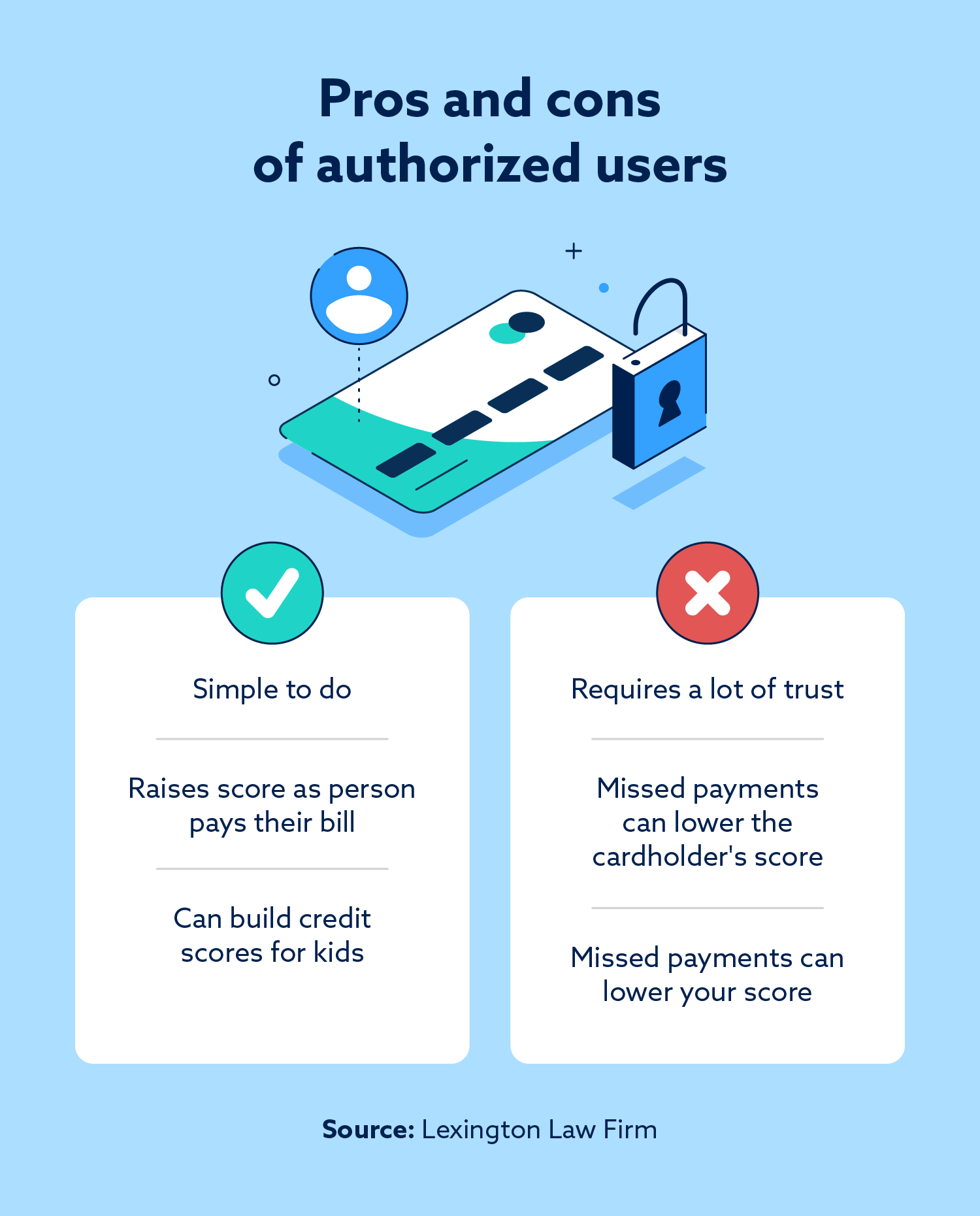
There are drawbacks to weigh. Late or missed payments by the cardholder can lower your score, and your own spending can affect theirs, so this arrangement requires a high level of trust. Before you agree, confirm that the issuer reports authorized users to the credit bureaus, since some cards report activity only for the primary cardholder.
2. Make payments on time and in full
If you want to know how to raise your credit score without a credit card, start with the accounts you already have. Paying on time and in full builds credit by keeping negative marks off your report, which matters because payment history carries the most weight in most scoring models. Every on-time payment on an existing loan or account adds to a positive history, while a single missed payment can undo months of progress.
Late payments typically are not reported to the credit bureaus until they are at least 30 days past due, so a payment you catch quickly may cost only a late fee. Once a payment is reported 30 or more days late, it can lower your score by dozens of points and stay on your credit report for up to seven years.
The simplest safeguard is automation. Set up automatic payments a few days before each due date, which gives you time to correct a problem if a payment fails.
3. Take out a credit builder loan
A credit builder loan is designed to help you build credit by reporting a steady series of on-time installment payments to the credit bureaus. Unlike a traditional loan, you do not receive the money up front. The lender holds the funds in a savings account or certificate of deposit (CD), and you receive the balance plus any interest earned after you pay off the loan.
Credit builder loans are commonly offered by credit unions, community banks and online lenders. According to Credit Karma, most credit builder loans range from $300 to $1,000, with terms of six to 24 months. Experian notes that APRs typically fall between 6 percent and 16 percent depending on your credit and the lender, and some lenders also charge a small administrative fee.
These loans are not free, and the trade-off is that you cannot use the money until the term ends. If you have thin credit and need funds right away, our guide on how to get a loan with no credit covers other options.
4. Get a co-signer for a loan
People with low or no credit often face barriers to approval for installment loans, such as auto loans, personal loans and student loans. A co-signer with established credit can help you overcome that challenge because the lender considers both of your credit histories. Once the loan is open, each on-time payment is reported to the credit bureaus and can help you build credit over time.
Consider asking a parent, partner or close family member, and be clear about the risks. A co-signer is legally responsible for the debt if you do not pay, and any late payments can damage both credit reports.
Only borrow what you can comfortably repay. Before you sign, add the new monthly payment to your existing debts and divide by your gross monthly income. If that debt-to-income ratio rises well above 36 percent, or if the payment would leave little room for savings, the loan may cause more harm than good. Taking out a loan you cannot afford can lead to late payments, collections and lasting damage to your credit.

5. Enroll in rent or utility reporting
Rent and utility payments usually do not appear on your credit report unless you enroll in an alternative credit data program that reports them. These programs collect payment information that the credit bureaus do not typically receive, such as rent, utility, phone and streaming payments.
Examples include rent-reporting services offered through landlords and property management companies, third-party services that report rent for a monthly fee and tools such as Experian Boost® that add eligible bill payments to your Experian credit file. Our guide on how to add utilities to your credit report walks through the steps.
Each program works differently, and not every lender or scoring model considers alternative data. Before you enroll, check which bureaus receive the data, whether there is a fee and what happens to the reported history if you cancel. Like traditional credit, alternative data rewards on-time payments, while late payments can work against you.
Establish your credit for better financial health
Knowing how to build credit without a credit card gives you more control over your financial future. Establishing credit can open the door to loan approvals, lower interest rates and better terms, and it can also affect leases and some employment decisions. If you know that a credit card would tempt you to overspend, the ways to build credit without a credit card above let you build trust with lenders on your own terms. Building good credit takes time, but steady habits compound.
As you build, check your credit reports and scores regularly so you can track your progress. If you notice information you believe is inaccurate, Lexington Law Firm® can help you identify and challenge questionable entries, and you can start with a free credit snapshot to see where you stand.
Building credit without a credit card: FAQ
How fast can I build credit without a credit card?
You can typically build enough credit history for a FICO® Score within about six months of opening your first reported account, such as a credit builder loan. Some VantageScore models can generate a score sooner, and building a strong score usually takes a year or more of consistent on-time payments.
Can I build credit if I have bad credit instead of no credit?
Yes, you can build credit if you have bad credit by adding positive information through on-time payments, lower balances and accounts such as credit builder loans. Positive activity can gradually outweigh older negative items, and disputing any inaccurate entries on a bad credit report may also help.
Can you have a credit score without a credit card?
Yes, you can have a credit score without a credit card as long as another account, such as a loan or an authorized user account, appears on your credit report. Scoring models need enough reported history to calculate a score, but that history does not have to come from a credit card.
How can I get my free credit score without a credit card?
You can get a free credit score without a credit card through many banks, credit unions and free credit-monitoring services, none of which require you to open a card. Lexington Law’s free credit assessment is another option that lets you see your score and review the factors affecting it.
Note: Articles have only been reviewed by the indicated attorney, not written by them. The information provided on this website does not, and is not intended to, act as legal, financial or credit advice; instead, it is for general informational purposes only. Use of, and access to, this website or any of the links or resources contained within the site do not create an attorney-client or fiduciary relationship between the reader, user, or browser and website owner, authors, reviewers, contributors, contributing firms, or their respective agents or employers.